Social media moderation isn’t just about deleting posts or enforcing rules – it’s about shaping the atmosphere of your online community.
For charities, where conversations often touch on deeply personal or emotive issues, the way you speak matters as much as what you say.
A thoughtful tone of voice can calm tensions, encourage empathy, and turn challenging moments into opportunities to build trust. Mastering it is one of the simplest, most powerful ways to protect your community and your organisation’s reputation.

Why Tone of Voice Matters
Online conversations can quickly become tense. Misunderstandings, frustration, and strong emotions are common – especially in the charity and nonprofit space where topics can be sensitive.
A consistent, empathetic tone defuses tension. Calm language reduces the chance of arguments spiralling and protects your reputation.
Supporters remember not just what you said, but how you made them feel.
Clear, kind communication helps people feel seen, heard, and valued – this ultimately strengthens your community. When members feel respected, they’re more likely to engage positively.
Principles of a Good Moderation Tone
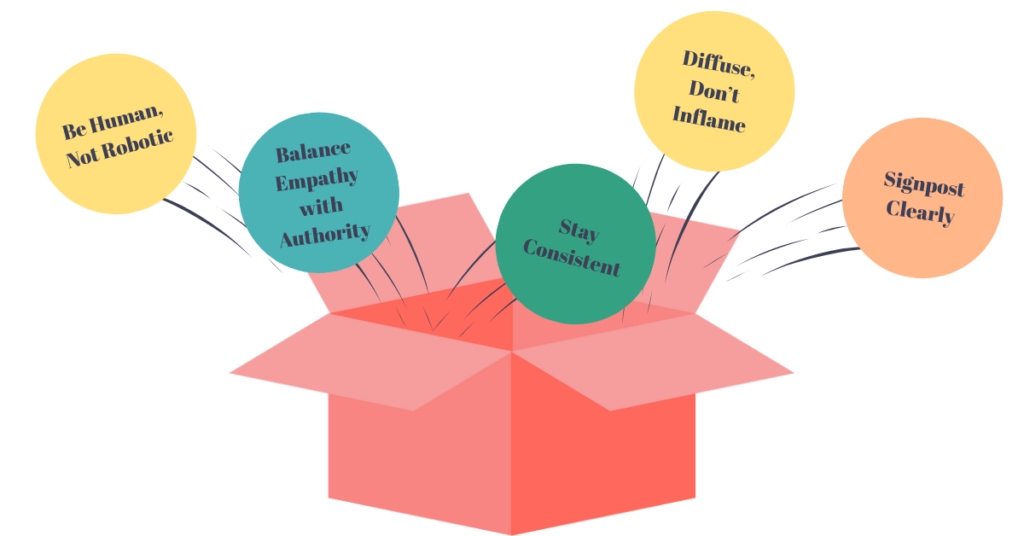
Be human, not robotic: Even small gestures – a friendly greeting, an acknowledgment of frustration – make a huge difference. People respond better when they feel a real human is behind the screen. Example: Don’t say: “This comment is inappropriate.” Do say: “Thanks for sharing your thoughts – please remember our community guidelines to keep the conversation safe for everyone.”
Balance empathy with authority: It’s possible to be firm without being harsh. Show understanding for emotions while clearly outlining what’s acceptable. Example: Don’t say: “Stop being rude or you’ll be banned.” Do say: “We understand you’re upset. Let’s keep the discussion respectful so everyone feels safe here.”
Stay consistent: All moderators should use a similar tone across channels. This consistency reassures supporters and helps your brand voice remain professional and approachable.
Tip: Create a short tone-of-voice guide for your moderation team. Include example phrases, dos and don’ts, and escalation guidelines.
Defuse, don’t Inflame: Avoid responding defensively, even when provoked. Calm, neutral language encourages positive discussion rather than further conflict. Example: Don’t say: “You’re wrong, read the facts.” Do say:“Thanks for sharing your perspective. Here’s some additional information that might help clarify the situation…”
Signpost clearly: Sometimes moderation isn’t about stopping behaviour – it’s about guiding it. Tone can gently steer people toward the right action or resource. Example: Don’t say: “That’s not our problem. Try elsewhere.” Do say: “Thanks for reaching out – this isn’t something we can resolve directly, but here’s a helpful resource [link].
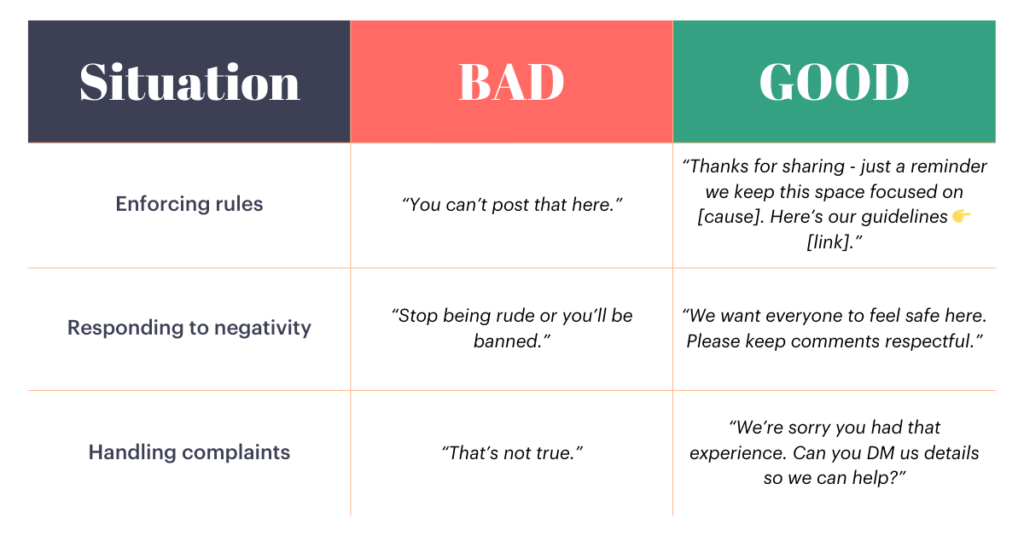
Some more ‘good’ vs ‘bad’ examples:
Key Takeaways
Tone is as important as rules or policies. Be human, empathetic, and consistent. Your aim should be to try to diffuse conflict rather than escalate it.
Use tone to guide, educate and protect your community. A strong tone of voice protects both your community and your organisation’s reputation.
Social media moderation isn’t just about removing harmful content – it’s about creating a space where supporters feel safe, heard and valued.
Mastering tone of voice is a small, consistent action that can transform your online community. Start small and stay consistent and you’ll see how tone of voice can have a real impact on your community.
Tone of voice is at the heart of how Social AF works with our charity partners every day. If you’re looking to strengthen your relationship with your online community, get in touch.