Social AF recently released our report “The State of Social: Wellbeing Insights from Social Media Professionals” and would like to follow-up with a series of blogs, aimed at addressing some of the key areas of concern.
One concern raised by social media professionals in our wellbeing survey, was managing workload. At Social AF, our moderators are fortunate that our primary focus is managing comments. However, internal teams within charities often juggle multiple responsibilities. Even within dedicated social media departments, roles tend to blend content moderation, content creation, reporting, and various other tasks. For some, the challenge goes beyond social media management — it’s about balancing social media duties with entirely different disciplines, such as fundraising.
Within this blog, we’ll share advice on how to prioritise your workload when it comes to social media moderation.
Step One: Agree on your moderation style
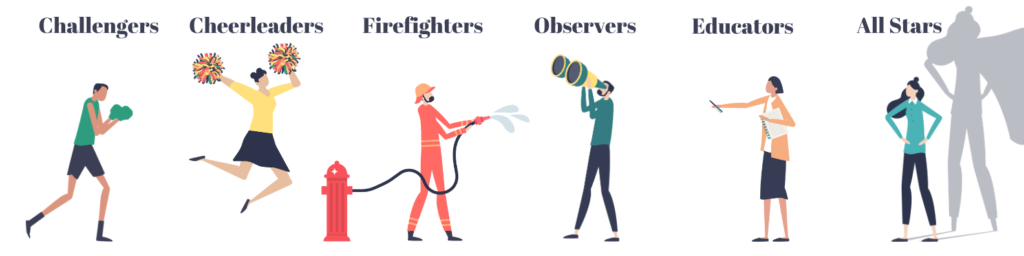
Social AF has observed different types of moderation styles across the different types of charities we work with.
Observers – tend to largely monitor activity and respond to very little. Often responses are only when there has been a direct question.
Firefighters – resources are applied when there is a problem. Social media feeds are safe from harm/problematic activity, but this means other important activity (such as giving thanks to donors) is overlooked.
Cheerleaders – use their resources to celebrate all the good stuff, and either ignore or delete anything else.
Educators – use moderation as an opportunity to inform, guide, and build understanding.
Challengers – proactively tackle misinformation. This style is particularly adopted by those who work in the campaigning space.
All Stars – can typically give full and adequate resource, meaning moderation is able to cover all elements.
Step Two: Determine a list of categories for your comment
This will look different for each charity. Some may have a great variety, others may see very similar themes. Here’s an example of what we see across multiple accounts, on a regular basis.
- Urgently in need of support (newly diagnosed / recently bereaved etc)
- Legitimate questions (how do I sign-up, how much from each £1 goes to the cause?)
- Tags in campaigns/organic content (@ ANON, fancy doing this?)
- Comments from people sharing experience as a statement without any obvious need for support (I lost my Grandad to this when I was little)
- Fundraising announcements (for example sharing final total for a sponsored event, or total from a fundraiser)
- Fundraising updates (marathon training updates)
- Short comments of support/ emoji only (💙💙💙)
- Political statements sharing opinions (Stop the boats)
- Spam (herbal remedy cures)
Step Three: Agree on a range of priorities and boundaries to work within
By agreeing on a list of priority comments, and a range to work within, you are empowering your team to adjust moderation within limits. This means if there are unexpected peaks in activities, the team can confidently manage their output, instead of trying to firefight and/or working overtime.
Here’s just one example of how you may choose to prioritise:
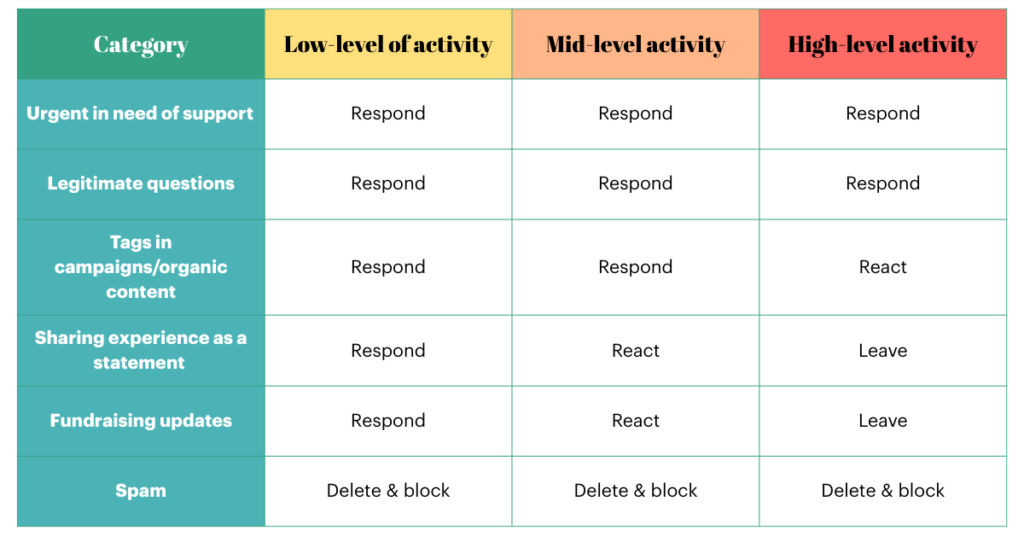
It goes without saying that if you want to ensure you’re always responding to everything, you need to ensure you have an adequate internal resource. Or you could consider working with an agency who can support you with your social media moderation.
Social AF invest a lot of time in the early stages of any new partnership to be able to understand differences in social channels and the variations in comments we might encounter. We work diligently to become the perfect reflection, leaving internal teams free to focus on other priorities.
If you are interested in exploring how we could add value to your work, please get in touch. We’d love to hear from you.


Hi