The rise of AI has transformed the way some charities manage their digital communities. Automated filters, sentiment analysis, and AI-powered triage tools are becoming more common.
They may make life easier for social teams handling thousands of comments during busy campaigns, but while AI can accelerate processes and reduce workload, there’s one area where it will never outperform people: human connection.
For charities, where conversations are often emotional, complex, and unpredictable, human-first moderation remains absolutely crucial.
The Emotional Intelligence Gap
Charity supporters don’t just show up to complete a challenge or join a group, they bring their experiences with them.
They share stories of:
- bereavement
- illness and treatment
- disability and chronic pain
- financial worry
- loneliness
Responding to these disclosures requires empathy. A moderator needs to read tone, build rapport, and choose language carefully. AI tends to generate generic wording, and subtle tone errors can come across as cold or dismissive. In a sector built on trust and compassion, that’s a risk charities cannot afford.
Humans can also recognise when someone sounds overwhelmed, even if they don’t use obvious “flag” words. That intuition really matters.

Context and Nuance Still Require People
AI is improving, but it still struggles with:
- sarcasm
- humour
- frustration masked as politeness
- cultural references
- community in-jokes
For example, teammates might jokingly tease each other about fundraising targets – something an automated system could mislabel as harassment. Likewise, a calm, polite message could contain a safeguarding risk that only a trained human would sense.
Community culture thrives on nuance, and nuance is inherently human.
Supporter Motivation Drives Fundraising
Much of community management is about encouragement. Emotional reinforcement is often what keeps someone supporters engaged. AI can answer questions, but it can’t cheerlead.
When people feel seen, they stay active, and in a fundraising context, that translates into real impact.
Managing Reputation Needs Human Judgement
Trolling, misinformation, and scams spread fast. Responding bluntly or too defensively can inflame tensions, while ignoring issues can damage trust.
Human moderators know when to:
- take a conversation offline
- de-escalate gently
- balance brand integrity with supporter feelings
AI lacks that gut instinct and diplomacy. Automated warnings can feel harsh or robotic.
Good moderation teaches better behaviour rather than simply punishing it.
Where AI May Help
When used responsibly, AI may be able to take pressure off teams during high-volume periods, especially busy moments like Christmas appeals.
AI tools can be used to:
- automatically filter profanities
- detect repeated spam
- flag concerning keywords
- summarise sentiment trends
This allows moderators to prioritise the most important conversations first. It also reduces exposure to abusive content, protecting moderator wellbeing.

What Should Never Be Fully Automated
Some interactions should always involve a real person:
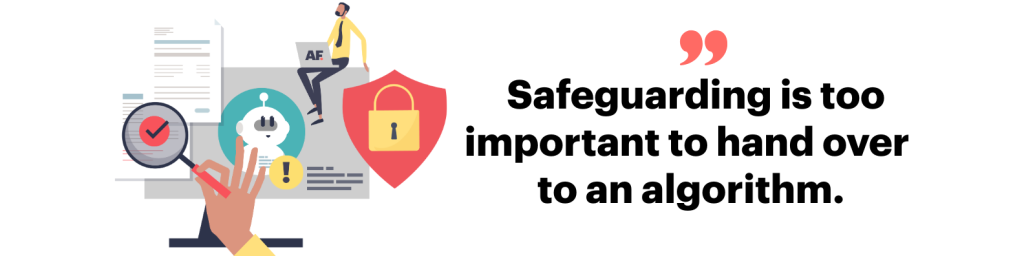
- safeguarding or crisis disclosures
- suicide ideation
- harassment or hate incidents
- bereavement
- scam escalation
- complex complaints
Here, tone, empathy, and accountability are everything.
Only humans can build relationships, genuinely protect wellbeing, uphold values, encourage participation and manage nuance.
Fundraising and community building are fundamentally human. No algorithm can replicate compassion, encouragement, or emotional understanding.