We talk a lot about the risks charities face on social media – trolls, misinformation, backlash, safeguarding concerns. But what about the people dealing with all of that, quietly, behind the screen?
Because here’s the truth: if your organisation is online, your comms team is doing a lot more than creating content.
They’re doing frontline work. Emotional work. Safeguarding work. And in many charities, they’re doing it alone.

It’s not “just” posting anymore
Gone are the days when charity social media was simply scheduling Tweets and sharing feel-good photos. Today, your social team might be…
- Reading distressing personal disclosures in the comments
- Deciding whether to delete an angry message from someone with lived experience
- Spotting racist or transphobic replies and working out how to act
- Fielding angry DMs at 10pm from someone who feels let down by your services
- Absorbing grief, frustration, trauma, and trolling — every single day
And still being expected to stay upbeat and on brand.
We’ve worked with comms staff who’ve received abuse in their inbox, been doxxed after a campaign misfire, or stayed up moderating a mental health post because they didn’t want to “leave it overnight.” None of that is in their job description. But it’s happening.
The emotional labour is real and often invisible
What makes it worse? This work often goes unnoticed.
To the wider organisation, it looks like:
“Just a few comments.”
“Just a quick reply to a DM.”
“Just hiding a couple of posts.”
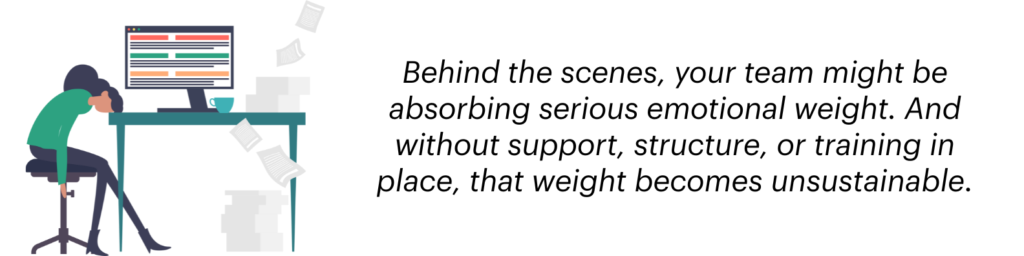
But behind the scenes, your team might be absorbing serious emotional weight. And without support, structure, or training in place, that weight becomes unsustainable.
We’ve spoken to comms professionals on the verge of burnout. You can read our Social Media Wellbeing Report here.
People who love their cause, who believe in their mission but who are carrying too much alone. Because digital is still seen as “light touch” work. Because moderation is seen as “extra.” Because safeguarding is assumed to be someone else’s job.
Good moderation doesn’t just protect your audience, it protects your team
At Social AF, we believe in moderation not just as a safety net for the public, but as a support system for the people running your accounts.
When you have experienced moderators in place, your comms team doesn’t have to:
- Decide in the moment what to do about a safeguarding disclosure
- Stay online for hours after their shift to manage a heated thread
- Respond to every critical or emotionally charged comment alone
- Absorb racism, ableism, or abuse without backup
We hold the frontline with care and clarity so that your team can breathe.
What charities can do to support their social staff better
You don’t need a massive budget or a 10-person comms team to make things safer. Here are a few small changes that go a long way:
Set boundaries: Define out-of-hours protocols. If you don’t have a team to monitor 24/7, say so clearly on your channels.
Train for real-life scenarios: Not just tone of voice but what to do when someone discloses abuse, posts in distress, or starts an argument.
Treat digital as frontline: Recognise the mental and emotional toll, just like you would for helpline or service delivery staff.
Bring in moderation support: Even just for campaigns or high-risk posts. It’s not a luxury, it’s part of safeguarding.
Check in with your people: Ask how they’re feeling. If they’ve seen or managed something upsetting, make space to talk about it. Don’t wait for a crisis.
You can’t pour from an empty inbox
The people behind your charity’s social media are doing vital work. They’re representing your values, holding your reputation, and keeping your community safe all in real time, often under pressure.
They need support.They need tools. And sometimes, they need someone else to take the strain.
That’s where we come in!