Social AF recently hosted an insightful and timely webinar on the state of Social Fundraising in 2025. Our aim was to cut through the noise to explore what’s really happening in the world of Facebook Challenges, shifting platforms, and supporter behaviour. Whether you missed it or want a refresher, here’s what we covered.
Despite growing concerns and narratives like “Facebook is dying” or “young people don’t use it anymore,” the data tells a more nuanced and encouraging story.
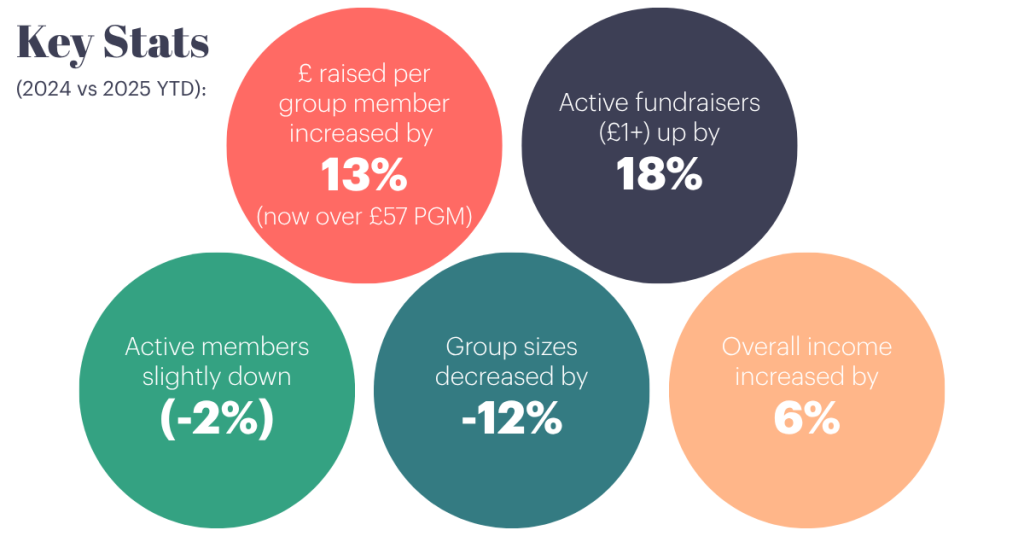
Looking at established challenges 12 and 24 months apart, we saw an average income increase of 21%. This is solid evidence that Facebook Challenges remain a high-performing model when done right.
We tackled some of the most common critiques and concerns head-on:
TRUE – but it doesn’t matter as much as you think.
The average challenge participant in the UK is 44 years old, with 35–44 being the most active demographic. Our core audience is on Facebook and still responding enthusiastically to fundraising efforts.
TRUE – but effectiveness hasn’t.
Even with slightly reduced user activity, challenges continue to perform, and engagement is strong in well-moderated, mission-driven groups.
TRUE – up by 30% according to Bluestep Solutions.
But here’s the twist: while group sizes dropped 13%, the quality of supporters has gone up, with:
Not so fast.
We examined alternative registration flows where supporters register before joining a Facebook group. While it might seem more streamlined, our case study revealed a 34% drop in income and significantly reduced group engagement.
Traditional flows (lead → group → register) still reign supreme, because community drives connection, motivation, and fundraising success.
We’re not ignoring innovation. Platforms like Instagram, TikTok, Strava, and WhatsApp are in the mix, and we’re testing, learning, and evolving.
The takeaway? Facebook still delivers the strongest return – but there’s room to experiment, especially with hybrid approaches.
Wherever your supporters gather, community is key:
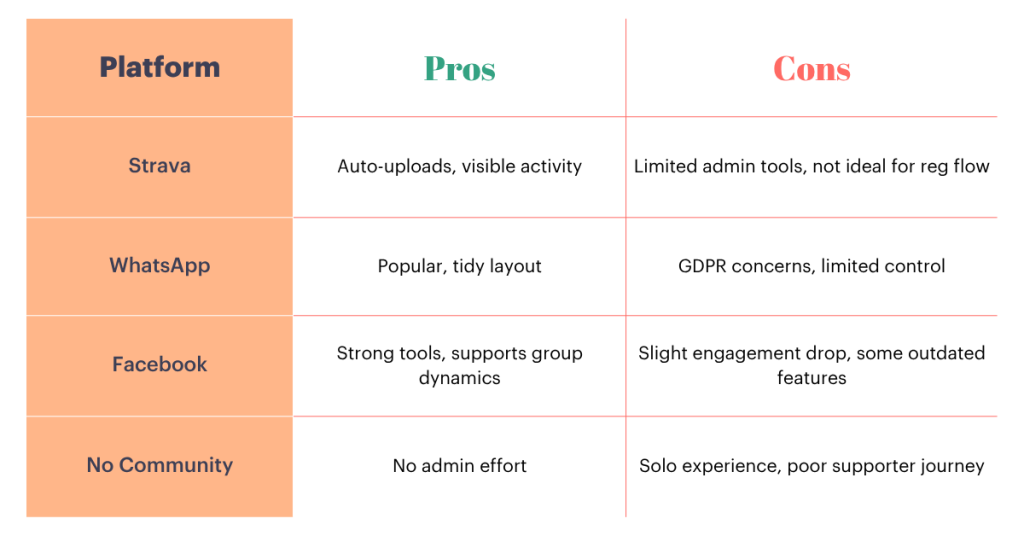
A challenge without community? Less impact, less engagement, and less joy!
If you missed our webinar, you can see the full presentation slides here.